

What Every CEO Should Know About Cyber Risk
Cybersecurity has fundamentally transformed from a back-office IT function into a front-line business risk. As companies accelerate digital transformation, integrate multi-cloud architectures, adopt SaaS ecosystems, automate financial operations, and embed AI models across workflows, they unintentionally expand their attack surface.
Cyber Risk In 2026, cyber criminals are faster, more coordinated, and increasingly automated. Yet the biggest paradox remains unchanged: the majority of breaches still occur due to the same, repetitive, preventable weaknesses—weak identity controls, stolen credentials, unpatched software, and poorly governed vendors.
The consequences?
- Financial losses in millions
- SEC enforcement
- Lawsuits from shareholders
- Customer churn
- Reputational damage
- Board pressure
- Insurance disputes
This new landscape forces CEOs to treat cyber risk with the same seriousness as financial risk, legal risk, and operational risk. No amount of technical expertise can replace strong executive direction—and in 2025, cyber resilience is a leadership competency, not a technical option.
Why Cyber Risk Is More Urgent Than Ever in 2025
Breach Costs Continue Rising Year After Year
According to IBM’s 2025 findings, the average global cost of a data breach ranges from $4.4M to over $5.1M, and the number increases further:
- Multi-cloud deployments amplify damage
- Ransomware increases operational shutdown time
- Third-party breaches multiply financial exposure
Businesses also absorb hidden losses like:
- Customer acquisition costs after churn
- Damage to share price
- Increased cyber insurance premiums
- Higher vendor compliance burdens
- Internal productivity disruption
In some sectors (healthcare, finance, telecom), breach costs exceed $9M per incident.
Attack Patterns Are Predictable—Yet Still Highly Effective
Verizon’s 2025 report reveals a frustrating truth:
Attackers don’t need sophistication. They just need your weakest door left open.
The top causes of breaches include:
Stolen Credentials
- 88% of basic web app attacks used stolen passwords
- Password reuse across SaaS tools fuels easy account takeover
- Token theft within browsers remains a major blind spot
Unpatched Vulnerabilities
- VPN devices
- Email gateways
- File transfer appliances
- Outdated server components
- Misconfigured cloud services
Attackers capitalize on the fact that many companies patch too slowly, leaving critical exposures open for weeks or months.
Edge System Weaknesses
The “edge” is everything that touches the internet—consoles, gateways, APIs, authentication points.
These are the easiest paths for attackers, and in 2025, automation makes exploitation nearly instantaneous.
New Disclosure Rules Add Pressure
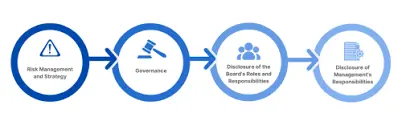
Public companies must:
- Determine materiality quickly
- Disclose material incidents within four business days
- Demonstrate governance maturity in annual filings
Delayed reporting, incomplete disclosure, or inconsistent public statements can result in:
- Regulatory penalties
- Investor lawsuits
- Severe reputational loss
- Loss of board confidence
Today’s CEOs must be legally ready, communicatively prepared, and operationally equipped to handle disclosure expectations.
Global Risk Climate Is Unstable
The World Economic Forum warns that:
- Cyber insecurity
- AI-powered misinformation
- Digital supply chain failures
rank among the top short-term global risks.
Boards now demand clarity on:
- Preparedness
- Incident containment ability
- Business continuity
- Vendor reliability
Cyber risk is not an IT concern anymore—it is a macro-economic exposure.

A CEO’s Simple, Practical Model for Understanding Cyber Risk
Cyber risk always breaks down into three layers:
Likelihood — The Probability of Attack Success
What Increases Likelihood
- Weak passwords
- Missing MFA
- Unpatched systems
- Exposed public services
- Unmonitored vendor access
- Shadow IT and unsanctioned AI
What Reduces Likelihood
- Phishing-resistant MFA
- Weekly patching discipline
- Strict identity governance
- Continuous attack surface monitoring
- Vendor access restrictions
In 2025, identity and patching are the most important levers—because almost every breach starts with one of these two weaknesses.
Impact The Damage When Something Goes Wrong
Impact depends on how deeply attackers can penetrate your environment.
High impact comes from:
- Flat networks
- Centralized and unsegmented data
- Slow restoration processes
- Poor backup architecture
- Unprepared response teams
Low impact comes from:
- Segmented environments
- Immutable or offline backups
- Automated containment actions
- Practiced playbooks
- Token revocation and rapid isolation
ENISA’s 2025 report shows that ransomware now spreads faster than ever, meaning containment speed is the number one impact reducer.
Exposure Your Regulatory and Contractual Responsibility
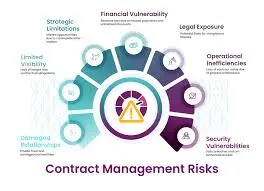
Exposure determines how much legal, financial, and reputational loss you face.
High exposure indicators:
- Weak governance
- No formal responsibilities
- Undefined vendor obligations
- Incomplete documentation
- Slow disclosure decisions
Low exposure indicators:
- Defined materiality criteria
- Clear communication policies
- Documented risk frameworks
- Tested response workflows
- Evidence of control effectiveness
Regulators and investors care about proof, not promises.
Five Strategic Decisions Only a CEO Can Make
Define Risk Tolerance Instead of Buying More Tools
Too many companies overspend on tools without reducing risk.
CEOs must demand a one-page risk boundary document listing:
- Mission-critical business processes
- Max tolerable downtime
- Max acceptable data loss
- Regulatory dependencies
- Recovery expectations
This eliminates guesswork and aligns budgets with real business priorities.
Mandate Strong Identity Security Across the Organization
Identity is the new perimeter in 2025.
CEOs must require:
- Phishing-resistant MFA (security keys, passkeys)
- Shorter session lifetimes
- Conditional access controls
- Secure recovery workflows
- Privileged identity management
Stolen credentials drive most breaches—and strong identity controls neutralize that pathway.
Patch and Protect Internet-Facing Systems First
Not everything can be patched immediately—but external systems must be.
Internet-facing assets include:
- VPN
- Email security appliances
- Key SaaS applications
- File transfer platforms
- Authentication terminals
Measure weekly:
- Time-to-patch
- Unpatched critical vulnerabilities
- Asset ownership
Failing here is like leaving the front door wide open.
Build Real Disclosure Preparedness
Have clarity on:
- Who determines materiality
- Who drafts the disclosure
- Who communicates with regulators and investors
- Which systems must be consulted
- How facts are validated
This prevents panic, errors, and legal violations when an incident occurs.
Validate Through Independent Testing
No toolset can prove real security. Only manual, human-led testing can.
Start with:
- Identity attack path testing
- Cloud misconfiguration assessment
- SaaS control validation
Then move to quarterly offensive emulation.
Investors and insurers increasingly require independent verification.
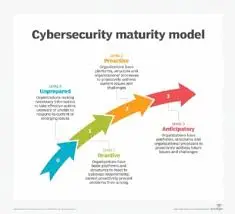
What a High-Maturity Cyber Program Looks Like
Governance That Inspires Investor Confidence
A strong governance layer includes:
- A named executive owner
- Board-level reporting
- A strategy framework (NIST CSF or similar)
- Clear metrics
- Documented responsibilities
- Tested incident response plans
Investors reward companies with predictable, disciplined governance.
Engineering That Shrinks the Attack Surface
Engineering improvements include:
- Phishing-resistant MFA everywhere
- Inventory of all external assets
- Strict configuration baselines
- Segmentation of high-value systems
- Immutable backups
- Quarterly restore testing
- Least privilege on all admin accounts
ENISA’s data shows the fastest-growing breaches hit organizations without segmentation or backup maturity.
Detection and Response That Matches Real-World Attacks
Effective detection programs include:
- Threat-informed, behavior-based alerts
- Playbooks for token theft
- Playbooks for BEC
- Playbooks for ransomware
- Rapid host isolation
- Fast token and session revocation
Verizon’s 2025 findings make clear that detection should revolve around identity misuse, not just malware.
A 90-Day CEO Cyber Transformation Roadmap
Days 1–30: Reduce Entry Points
- Enforce phishing-resistant MFA
- Remove SMS for high-risk roles
- Weekly patch reviews
- Tabletop BEC and ransomware
- Commission identity-centric penetration testing
Days 31–60: Limit Impact
- Implement segmentation
- Validate backups physically
- Shorten token lifetimes
- Enforce vendor SSO + MFA
- Time-bound vendor access
Days 61–90: Validate & Demonstrate Readiness
- Publish board metrics
- Finalize disclosure communications
- Conduct second validation test
- Build quarterly testing schedule
This cycle builds continuous improvement and reduces the blast radius of incidents.
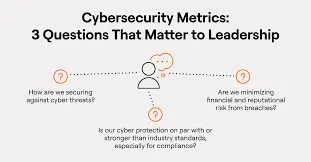
Executive-Level Metrics the Board Will Respect
MFA Coverage
Target: 100% for high-risk roles.
Mean Time to Patch
Measure in days—critical vulnerabilities must not linger.
Backup Reliability
Verify restore times through drills.
Detection-to-Containment Speed
Target: minutes, not hours.
Third-Party Security
Track vendors using enforced SSO + MFA and audit their change logs.
These metrics provide hard evidence of risk reduction—data that investors trust.
Common CEO Questions — Expanded, Strategic Answers
Are we investing enough in cybersecurity?
Spending is irrelevant unless tied to measurable outcomes.
Look at:
- MFA adoption
- Patch speed
- Response readiness
- Control validation
- Segmentation coverage
Compare exposure to IBM’s cost benchmarks to determine ROI.
What is the single most impactful control?
Phishing-resistant MFA + rapid patching together eliminate the top two breach vectors.
How do SEC rules change our obligations?
You must:
- Make materiality decisions faster
- Provide truthful, timely public statements
- Document governance clearly
Regulators can penalize both delays and inaccuracies.
Do we need red teaming or penetration testing?
Start with manual penetration testing to uncover real attack paths.
Adopt red teaming only after foundational controls are in place.
What about AI risk?
AI is a double-edged sword:
Benefits:
- Faster investigation
- Reduced alert noise
- Automation of repetitive tasks
Risks:
- Shadow AI systems
- Unchecked model usage
- Data leakage
- Manipulated outputs
IBM’s 2025 research identifies poorly governed AI as a major breach factor.
For more
For more exclusive influencer stories, visit influencergonewild